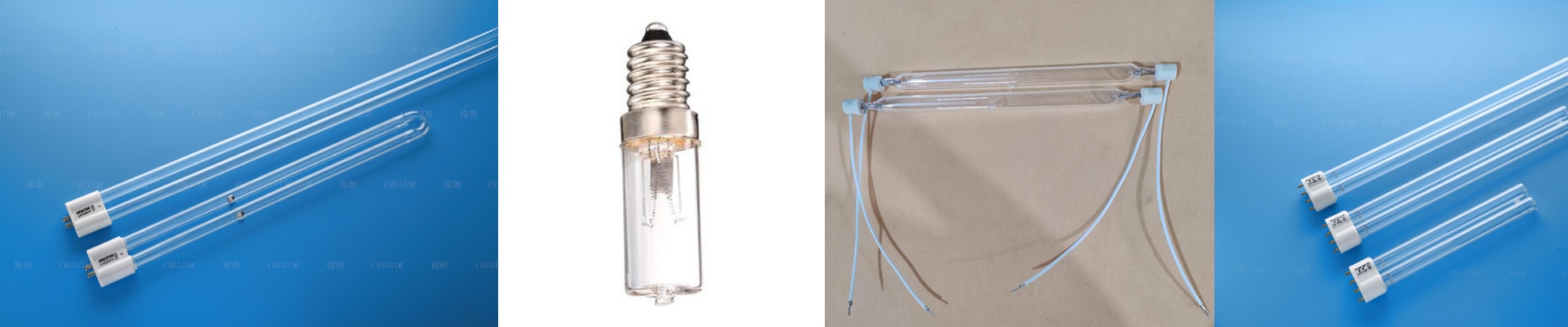
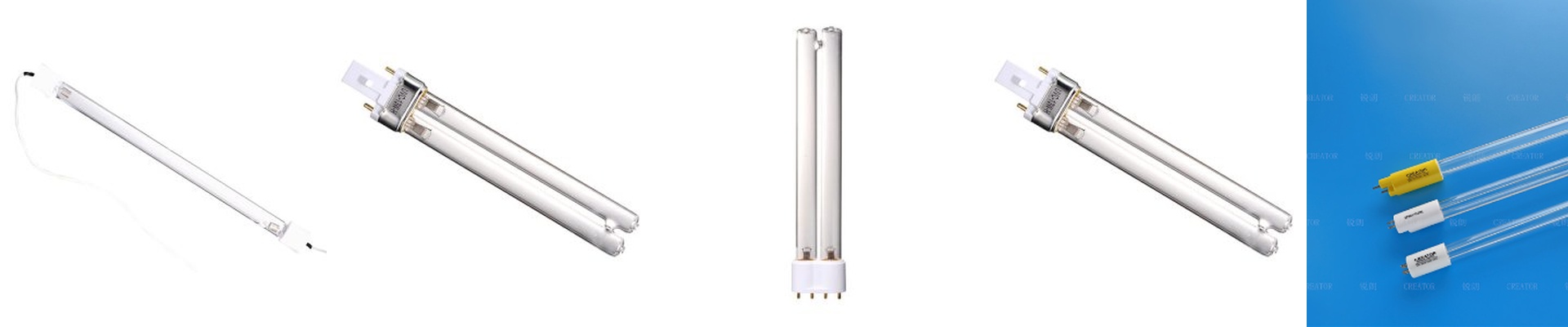
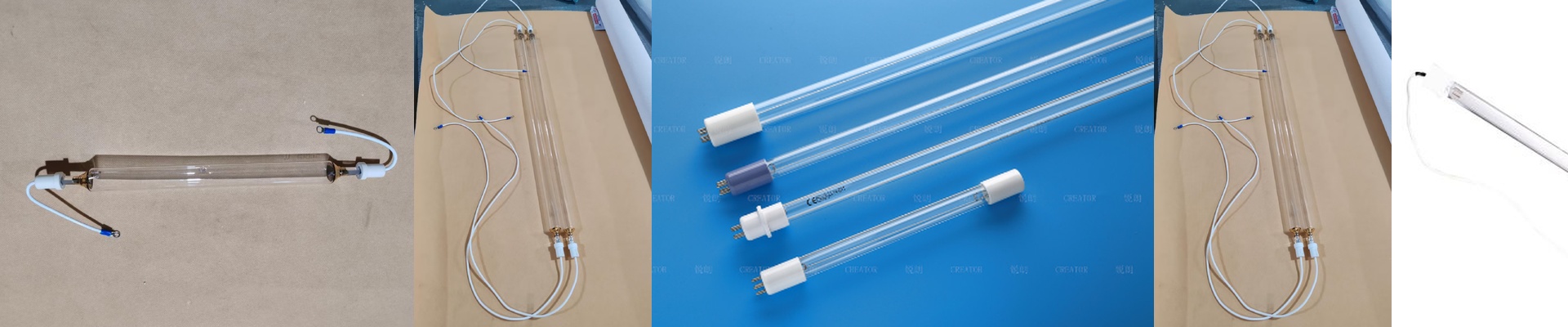
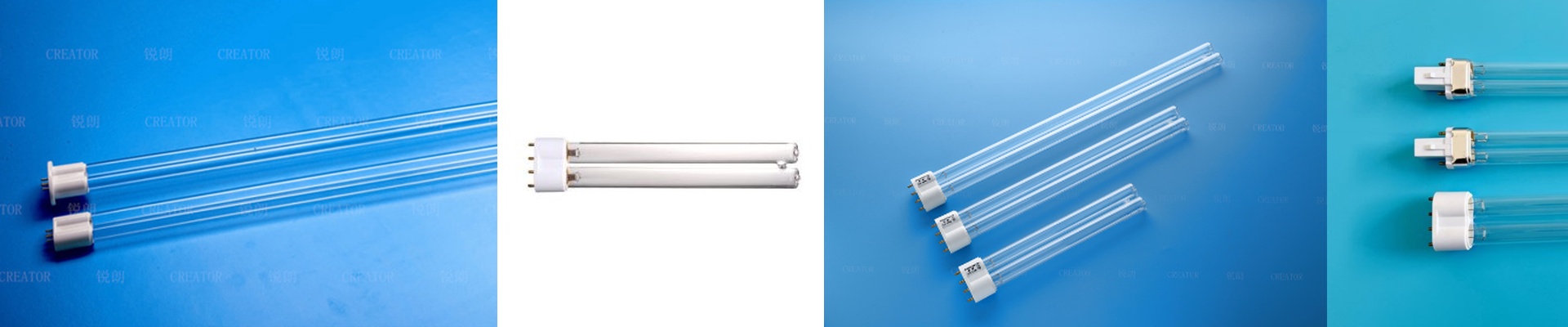
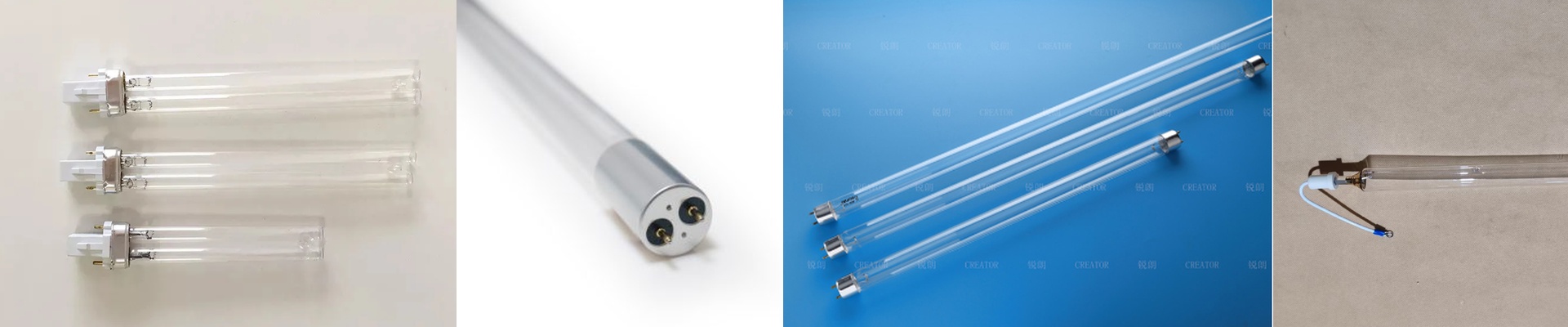
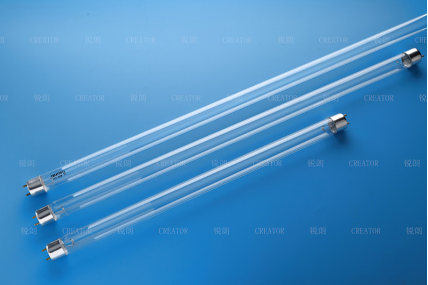
On the press line, seconds are money. When an adhesive layer doesn’t lock up instantly, the whole run seizes—substrates stack up, throughput falls off, and rejects start climbing. The fix comes down to a UV lamp that can deliver repeatable, high-intensity output at the exact wavelength your photoinitiator is tuned for. What matters under the hood UV curing is photochemical, not thermal. Our high-pressure mercury vapor lamps are built around a stable arc and a precisely engineered envelope, giving you spectral output that peaks at 365nm, with strong output around 313nm and 436nm to cover broad photoinitiator absorption. Pair that with a dichroic-coated reflector, and you get the peak irradiance at the substrate needed to drive cross-linking in milliseconds. We talk energy density in mJ/cm², not some vague “power,” because your cure window is set by fluence, not watts alone. Keep lamp-to-substrate distance stable, keep arc electrode temperature consistent, and you keep output flat across the cure zone—no dips that come back as under-cure when line speed climbs. Why this plays in the real world In industrial printing and finishing, UV adhesive curing needs a lamp that dumps high photon flux into a thin film without cooking the substrate. Our system delivers the UV dose for instant cross-linking—no waiting, no post-bake. That means you can run faster, cut rejects caused by adhesion failure, and count on consistent bond strength. Energy use drops because the reaction is triggered by photons, not heat, and lamp life is managed by keeping arc stability under control. Many units run 5,000+ hours before output degradation is something you have to address. Here are the details that bite Matching the lamp to the chemistry isn’t optional. Adhesives formulated for 385nm or 405nm need a different spectral profile than standard 365nm-dominant mercury lamps. And high peak irradiance means you have to stay on top of heat management—cooling and reflector alignment have to be maintained to avoid hot spots and uneven cure. If you’re integrating, confirm connector interface, voltage, and envelope dimensions so the lamp drops in cleanly to your curing module. We design for the press room as it is: consistent spectral output, repeatable dose, and uptime you can actually plan around.