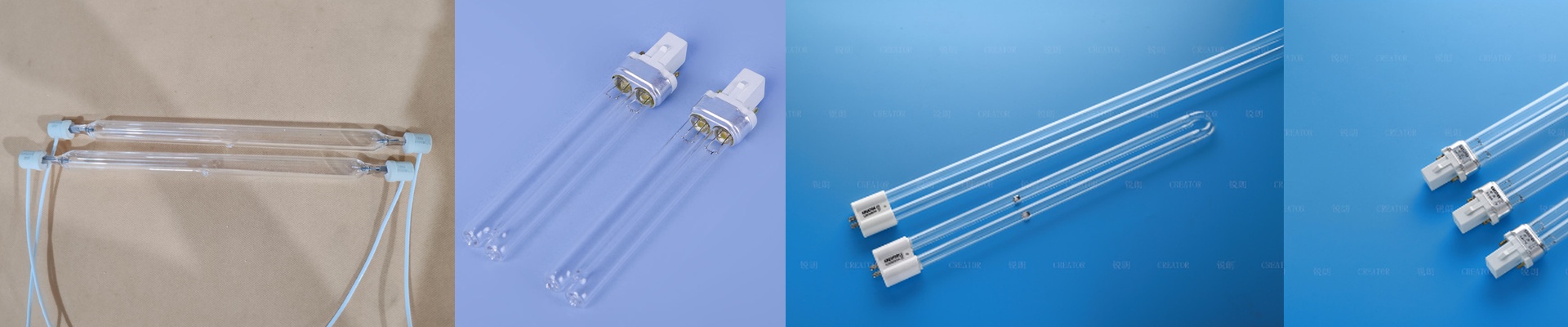
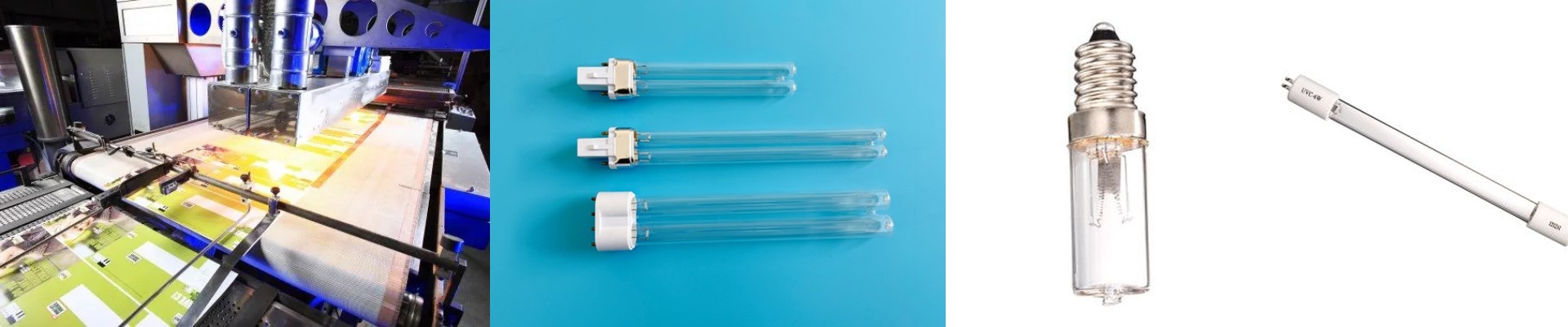
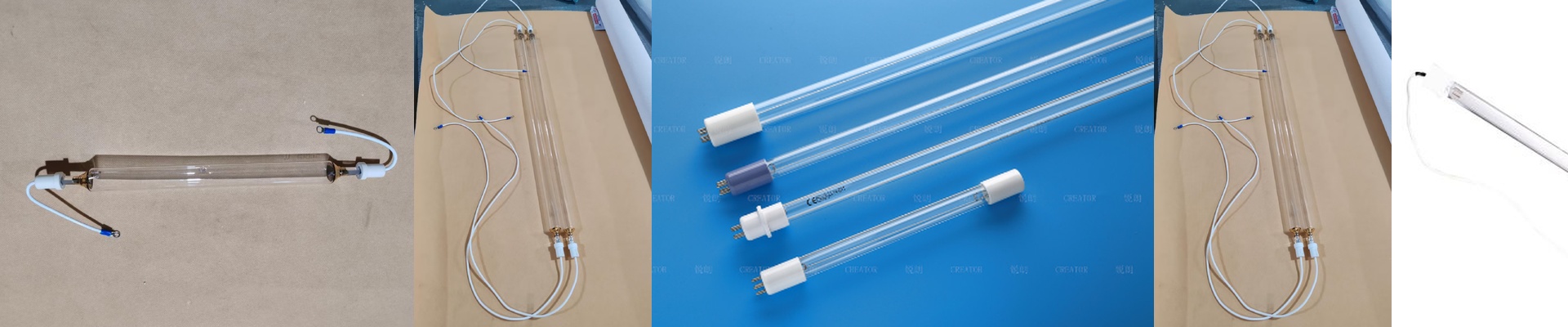
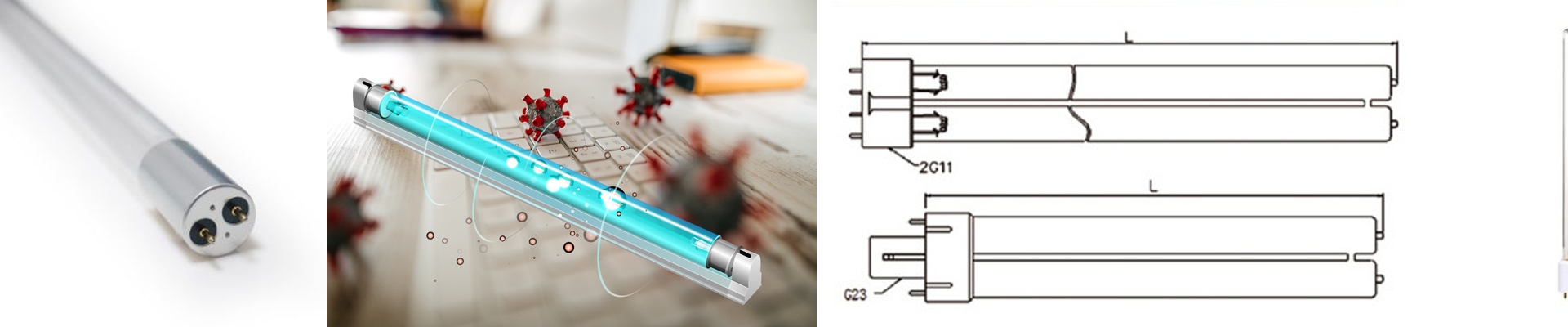
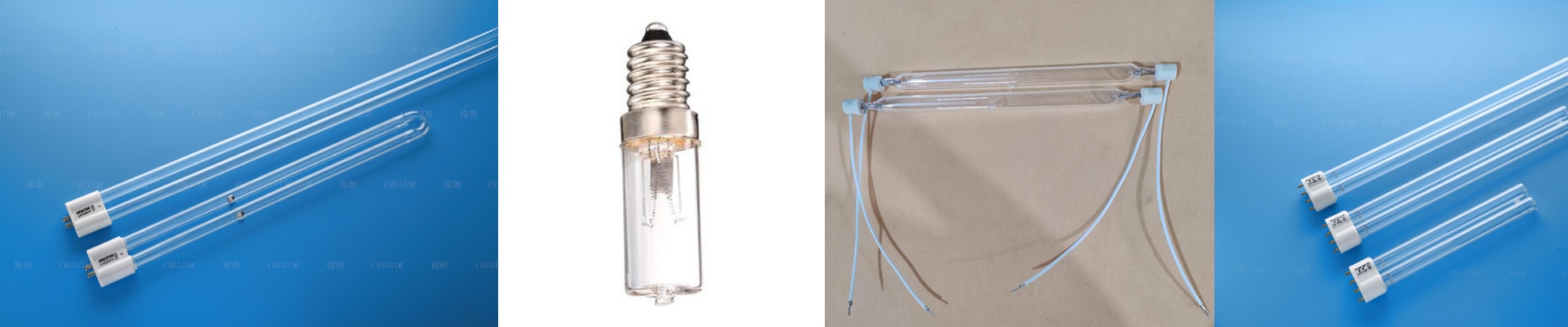
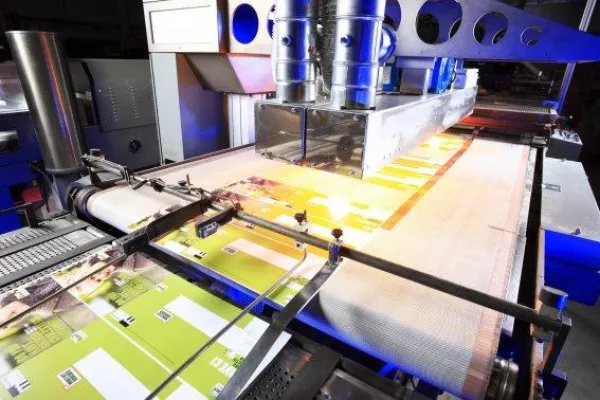
On an export press line, downtime isn’t a metric—it’s lost sheets and blown shipment windows. When you ship an automatic printing machine into a market that demands strict compliance and nonstop uptime, the curing and disinfection modules can’t be an afterthought. OEMs spec in CE-certified low-pressure UVC germicidal lamps for a reason: the lamp isn’t just “a light.” It’s a controlled output device that keeps energy density stable, chemistry repeatable, and microbial load off the substrate.
What matters, technically
Low-pressure UVC runs on a different emission logic than high-pressure mercury vapor systems. Output is concentrated around 254 nm—monochromatic, germicidal, and efficient at hitting microbial DNA and RNA. In printing, that same wavelength is also a known driver for certain photoinitiator systems. You get controlled surface cross-linking without the broadband heat load that can distort thin films or warp substrates. The performance you care about is measured in familiar units: peak irradiance and delivered energy density. Stable 254 nm output means repeatable exposure at the web or sheet—exactly what you need when you’re running 24/7 and want the same conversion, shift after shift. We design the lamp to hold spectral output steady over life, with a controlled degradation curve so your process window doesn’t drift. The quartz envelope is chosen for high UVC transmission and thermal stability, and the internal fill is tuned for consistent starting output and long burn-in stability. CE certification isn’t paperwork for show. It means the lamp assembly meets the Low Voltage Directive for electrical safety and the EMC requirements for industrial electromagnetic compatibility. For export machine builders, that cuts compliance risk and speeds time-to-market because the component is pre-audited. Mechanically, the interface is engineered for repeatable lamp-to-reflector alignment—because that alignment directly shapes irradiance uniformity across the target width. Reflector efficiency and dichroic coatings are matched to 254 nm, so photons go where they’re needed instead of being wasted as heat.
Why it fits in an export-grade press
In a fully automatic export press, the UV module sits at the crossroads of productivity, quality, and compliance. A low-pressure UVC lamp gives you two practical wins in one package. **Curing stability that keeps the chemistry honest.**Many UV-curable inks and coatings rely on photoinitiators that respond to short-wave UV. The 254 nm output gives predictable excitation, so cross-linking is reliable at the surface and through the layer. That matters when you’re running high-speed flexo or screen lines and need immediate tack-free conversion—without solvent flash or heat sag. **Germicidal control where contamination shows up as scrap.**In packaging and label work, microbial load on substrate or rollers can turn into defects that show up hours later. Integrating UVC into the line keeps microbial contamination in check, protecting the print surface and cutting scrap that shows up as pinholing or fisheyes. As a spec-in OE component, the lamp is matched to the machine’s lamp housing, power supply, and cooling envelope. That means you can set cure profiles once and lock them in across multiple units. You get repeatable energy density at the substrate, which helps keep color-to-color registration stable and reduces the need to chase cure by constantly adjusting line speed. Energy use is also lower compared with broadband sources, because the output is concentrated where the photoinitiator and disinfection process need it—not spread across wavelengths that don’t do the work. In the field, machines shipped with CE-certified low-pressure UVC lamps spend less time in troubleshooting and less time on compliance documentation. The lamp becomes a predictable subsystem, not another recurring service call.
The real-world constraints you plan for
Low-pressure UVC is precise, but it isn’t plug-and-play unless you design for it. Here are the constraints that show up on the floor. **Ozone management.**Standard low-pressure UVC lamps can generate ozone at the lamp surface. We supply ozone-free variants using special envelope materials and coatings. If you choose a standard lamp, the reflector and housing need proper ventilation and ozone control—or you spec the ozone-free option for confined spaces. **Lamp-to-substrate distance and uniformity.**Delivered energy density is peak irradiance times exposure time. Move the lamp farther from the substrate and irradiance drops by the inverse square law. If your print width varies, you need a reflector design that maintains uniformity across the active zone, or you adjust dwell time via line speed. **Power supply and ignition compatibility.**Low-pressure lamps need ballasts matched to their electrical characteristics. Mismatched drivers shorten lamp life and destabilize output, and that drift shows up as inconsistent cure performance. **End-of-life behavior.**Unlike high-pressure mercury lamps that can fail suddenly, low-pressure UVC lamps typically show gradual output decay. Monitor accumulated operating hours and track output with a spectral radiometer, and you can replace the lamp before it falls below your minimum energy density threshold. If you’re building export-grade automatic printing machines and need a component with stable spectral output, predictable energy density, and compliance documentation that survives audits, spec in CE-certified low-pressure UVC lamps as original equipment. We design them to integrate cleanly into your curing module so the line runs the way your spec sheet says it should.